
Citizen Sleeper Review and Why Its Dice Rolls Feel Human
Citizen Sleeper hands you five dice every morning and a body that is quietly falling apart, and the first hour feels like the worst job you have ever held.
Citizen Sleeper hands you five dice every morning and a body that is quietly falling apart, and the first hour feels like the worst job you have ever held. My first run on Erlin's Eye had me scraping barnacles off a docked hauler for food credits while a corporate hunter worked his way through the station's registry looking for me. I had no idea whether I was playing well. That uncertainty turned out to be the design, not a failure of signposting.
This Citizen Sleeper review covers Jump Over the Age's 2022 dice RPG after two full runs, about 29 hours including the three free episodes. It is a text heavy game about debt, precarious work and the small kindnesses that make a station liveable. It is also the only game I have played where the face of a single die made me say something out loud.
What Citizen Sleeper Puts You In
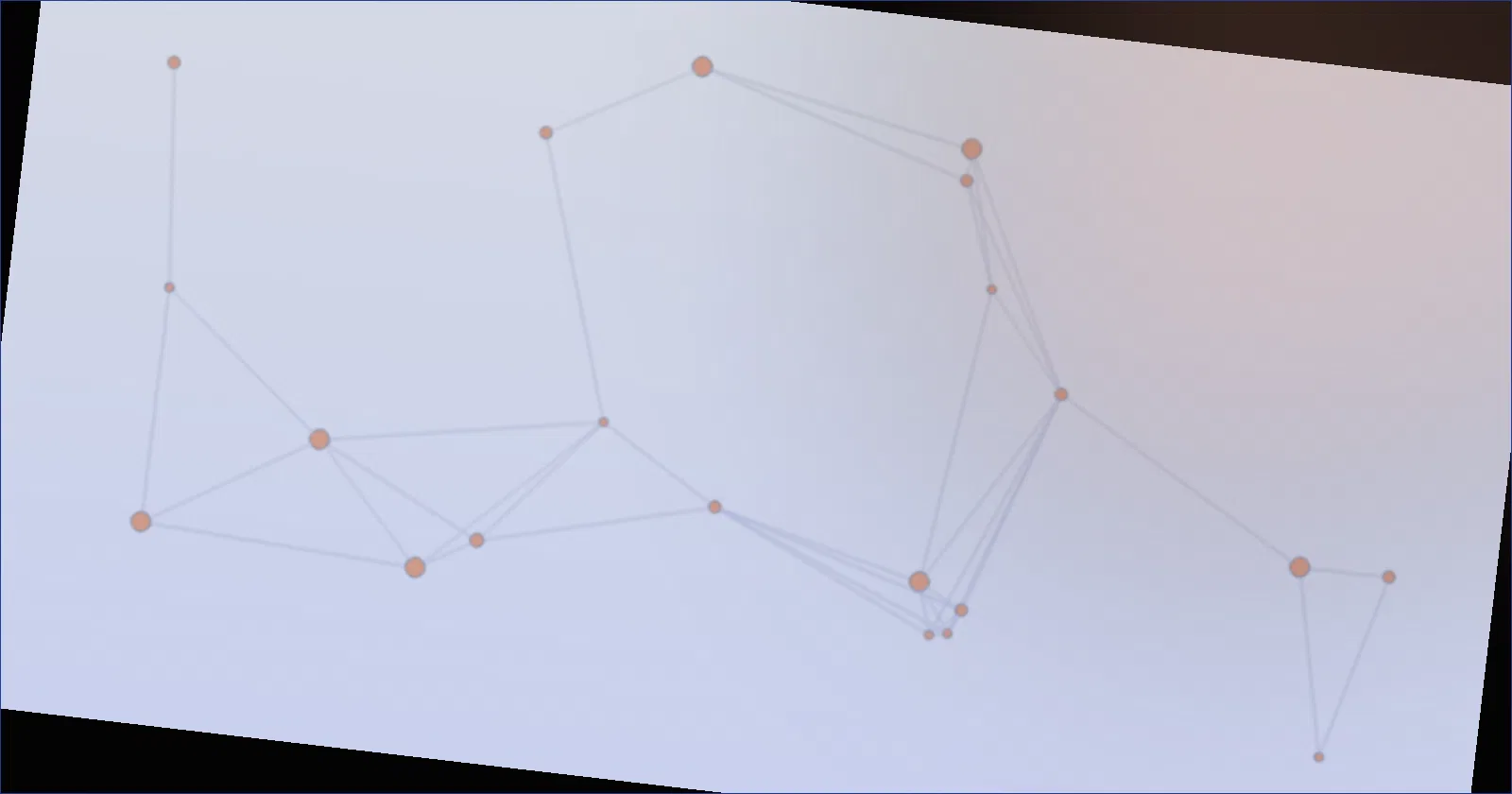
You play a Sleeper: a human mind scanned, emulated and installed in a manufactured body owned by a corporation called Essen Arp. You ran. The game opens with you hiding on Erlin's Eye, a ring station orbiting a gas giant, holding no money, no stabiliser for your decaying frame, and no legal claim to your own existence. Under your contract you are not a person who owes a debt. You are the collateral.
That premise is not set dressing. Every system grows out of it. Your frame needs a drug you cannot afford, so your dice pool shrinks if you ignore it. Anyone who recognises your model can sell you back, so reputation is a liability as often as an asset. The dockworkers, salvagers and cooks around you all carry a version of the same problem, which is why their offers of help land with real weight.
The writing carries the game. Emphis runs a food stall and feeds you before he knows anything about you. Riko salvages in the wreck fields and treats a dead ship's hull as a second home. Lem and Mina, an engineer and his daughter, are saving for passage out. Ethan Ward, the hunter Essen Arp sends, talks like a man filling in forms. There is no voice acting and no animation to speak of. The prose is second person, short and concrete, and I never once wished someone would read it to me.
How the Dice Actually Work
A cycle is a day. At the start of each one you roll a pool of dice, five when your frame is healthy, fewer as condition drops or energy runs out. You then place those dice on actions scattered across the station. Every action is a clock with segments, and filling the clock pays out: credits, a component, a piece of information, a step in someone's story.
The face of the die decides what the placement does, and that is where the tension sits.
| Die face | What it does | How it feels in practice |
|---|---|---|
| 5 or 6 | Fills a segment, often triggers the good branch | You spend it on the thing you actually care about |
| 3 or 4 | Fills a segment with no bonus | Workhorse die, goes on grinding out rent |
| 1 or 2 | Risks a negative outcome and can empty a segment | You either waste it somewhere harmless or gamble |
Four skills shape the odds: Engineer, Interface, Endure and Intuit. Each action is marked with a glyph, and your rating in that skill shifts the result of whatever die you drop on it. A Sleeper with Engineer at three turns mediocre rolls into useful work on mechanical jobs, while the same die on a social task stays mediocre. You get one skill point roughly every time a drive completes, so by the end of a run you have shaped a specialist, not a generalist.
Two meters push against you. Energy drains each cycle and you restore it by eating, which costs credits or a favour. Condition drops faster, and when it bottoms out you lose a die permanently until you find stabiliser. Losing the fifth die hurts more than it sounds, because a five die pool usually contains one high face. A three die pool often contains nothing but ones and twos.
Letting Your Condition Slip Is Not Actually a Mistake
The common advice for new players is to secure a stabiliser supply before anything else, treat condition as a hard resource, and never let it fall into the red. I followed that on my first run and had a worse time for it.
Here is the problem. Locking down stabiliser early means taking the first reliable job you find and repeating it for ten or twelve cycles. The game does not punish that. It just quietly turns into a chore spreadsheet, and you miss the window where the interesting offers appear. On my second run I let condition drop to two dice twice, took the bad outcomes, and ended up in a negotiation with a character I had never met in run one because my desperation opened it.
Citizen Sleeper is unusually generous about recovery. There is almost always a way back, and the writing treats a bad cycle as a thing that happened rather than a loss condition. Playing it like a survival optimiser flattens the best part of it. If you want a game where tight resource play is genuinely the point, Into the Breach rewards that instinct far better. Here the dice are a storytelling device wearing a strategy costume.
Where It Sags
Around cycle 25 the economy stops arguing with you. Once two or three income clocks are running, you have more credits than you need and energy stops mattering. The middle of my second run had a stretch of maybe six cycles where I was placing dice without thinking, waiting for a drive to tick over. The game is roughly 12 hours for the base story, and about an hour of that is admin.
The three free episodes released after launch, Flux, Refuge and Purge, add a refugee crisis, a settlement project and a hunt. They are good, and they also stack timers that compete for the same dice. Starting Purge while Refuge is mid construction means one of them gets the ones and twos. I would play Flux alongside the main story and save the other two for a second run.
The other limit is simple: this is reading. Hours of it. There is no combat, no map traversal beyond clicking a node, and no spectacle. If text on a station schematic is not enough to hold you, nothing later in the game changes that.
Who Should Play It
Play it if you like games that make a mechanic argue for a theme, and if you have ever worked a job where the rent arrived faster than the pay. It suits short sessions, about twenty minutes a cycle, and it suits players who finished Pentiment and wanted more games that trust prose. It runs on anything, including a laptop with integrated graphics, and it was on Game Pass at launch.
Skip it if you need action, voice work or a clear win state. The list price is 19.99 US dollars on Steam and it has dropped to around six dollars in sales more than once, so there is no urgency. The sequel, Citizen Sleeper 2: Starward Vector, arrived in January 2025 and takes the same dice system onto a ship with a crew, which is worth knowing before you decide where to start.
FAQ
How long is Citizen Sleeper?
The main story runs about 12 hours. Adding the three episodes and chasing most of the character arcs took me closer to 18 on one save. A completionist run with all five drives finished sits around 20 to 22.
Can you fail or lose in Citizen Sleeper?
Not in a traditional sense. Your frame can degrade to the point where you have very few dice, and some story branches close permanently, but the game has no game over screen. The worst outcome is a narrower run, not a dead end.
Do you need to play Citizen Sleeper before the sequel?
No, Starward Vector tells a separate story with a new cast. Playing the first game makes a handful of references land harder, and it teaches the dice system at a gentler pace, so I would still start here.
Is Citizen Sleeper good for people who dislike dice games?
Often yes, because the dice are not a pass or fail check. A low roll usually buys you a worse version of what you wanted rather than nothing, which removes most of the frustration people associate with random outcomes.
The Verdict
Citizen Sleeper is a small, tightly argued game that uses five dice to say something sharp about who owns your time. Its mid game goes slack and it asks for a reader's patience, but the first three hours and the last two are as good as anything in the genre. Give it until the first time you lose a die: if that moment lands as a story instead of a penalty, you are the right player for it. More picks like this sit in our other game reviews.
More in Games
 Games
The Finals Review and Why Its Destruction Changes Fights
The clearest moment I have had in The Finals lasted four seconds and involved no shooting.
 Games
Tekken 8 Review and Why Its Heat System Pushes Aggression
I spent my first thirty hours of Tekken 8 losing to people who were worse at the game than me. Not in a vague way.
 Games
Rainbow Six Siege Review and Why Its Learning Curve Bites
My first ranked round in Rainbow Six Siege lasted eleven seconds.